Desa Selatan Beef
Desa Selatan BeefSkudai, Johor · Malaysia

Operational Workflow

Slaughtering & Processing Architecture

A disciplined ten-stage industrial sequence integrating veterinary inspection, halal slaughtering principles, controlled chilling, precision cutting, and cold-chain dispatch.

Standard Process Framework Notice

The ten stages below explain the standard operational processes Desa Selatan Beef is designed and structured to support. They are presented as operational workflow documentation rather than independently audited facility claims.

Halal slaughtering procedures follow applicable Malaysian halal principles; official halal certification status remains subject to formal verification before public launch.

Stage 1

Livestock Sourcing & Receiving

Structured intake procedures designed to verify supplier documentation, animal identity, transport welfare, and initial receiving condition.

  • Livestock supplier documentation verification
  • Animal identification and traceability logging
  • Structured transport and unloading procedures
  • Initial receiving condition inspection
  • Animal welfare and lairage resting checks
Livestock Sourcing & Receiving
Stage 2

Ante-Mortem Inspection

Pre-slaughter veterinary screening to assess animal health and segregate any livestock unsuitable for food processing.

  • Veterinary health examination prior to slaughter
  • Physical condition and vitality assessment
  • Identification and isolation of unsuitable animals
  • Batch documentation and traceability linkage
Ante-Mortem Inspection
Stage 3

Halal Slaughtering

Slaughtering workflow designed in accordance with applicable Malaysian halal requirements and recognized Islamic dietary principles, subject to official certification confirmation prior to launch claims.

  • Qualified Muslim slaughter personnel
  • Calm, humane animal handling protocols
  • Recitation of the Islamic invocation (Tasmiyah)
  • Proper severing and bleeding slaughtering procedure
  • Respect for animal welfare throughout handling
  • End-to-end halal integrity and segregation
Halal Slaughtering
Stage 4

Post-Mortem Inspection

Thorough carcass and viscera examination to verify food safety suitability and approve or condemn tissues under regulatory criteria.

  • Systematic carcass and organ examination
  • Qualified veterinary inspection protocols
  • Identification of anomalies or contamination risks
  • Food safety suitability assessment
  • Clear approval or rejection tagging per requirements
Post-Mortem Inspection
Stage 5

Carcass Dressing

Hygienic separation of non-food hides and internal organs, thorough carcass washing, splitting, and preparation for chilling.

  • Controlled hide removal preventing surface contact
  • Hygienic evisceration and edible/inedible segregation
  • Sanitized carcass washing and trimming
  • Precision carcass splitting into sides
  • Final dressing inspection prior to chilling
Carcass Dressing
Stage 6

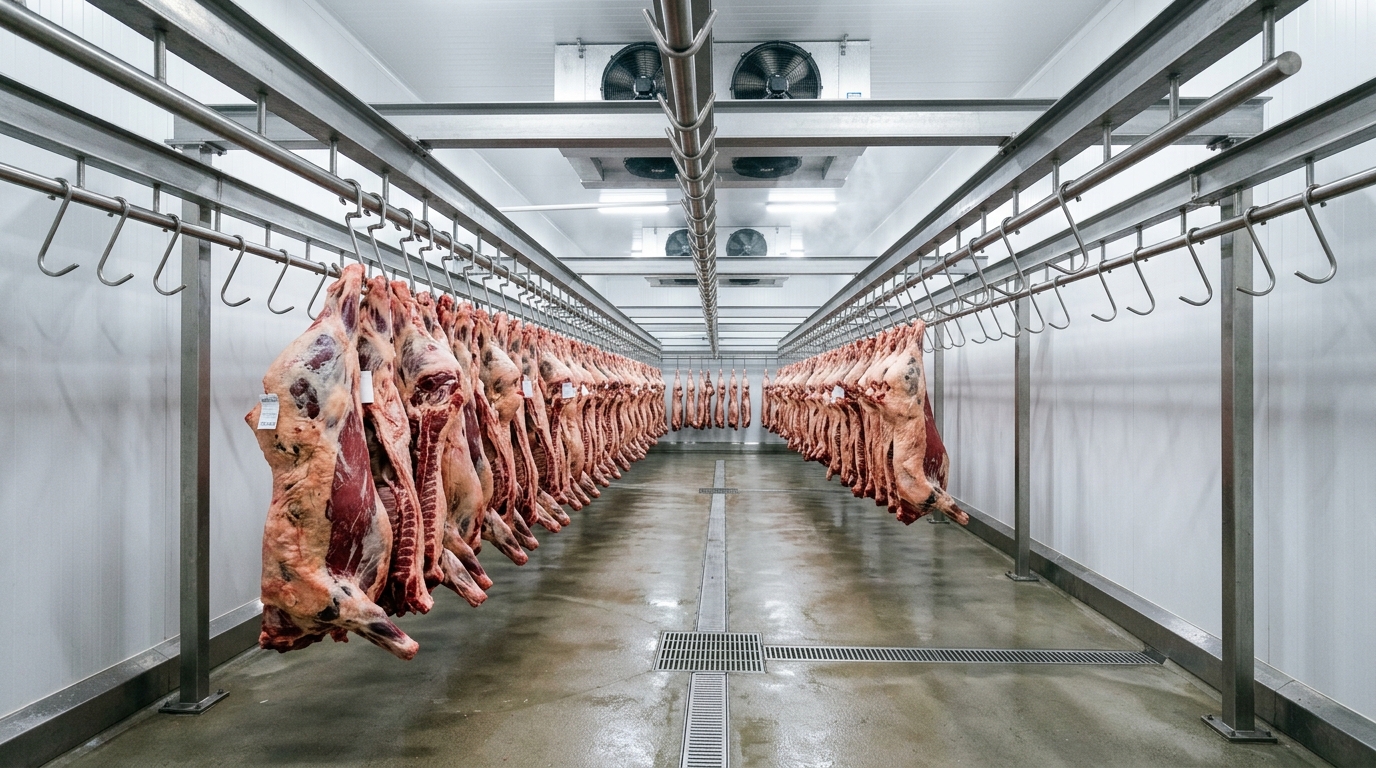
Chilling

Prompt temperature pull-down in dedicated chiller rooms with continuous monitoring to safeguard meat quality and microbial control.

  • Controlled carcass chilling curves
  • Continuous chiller temperature monitoring
  • Hygienic rail spacing and air circulation
  • Sanitary carcass handling prior to boning
Chilling
Stage 7

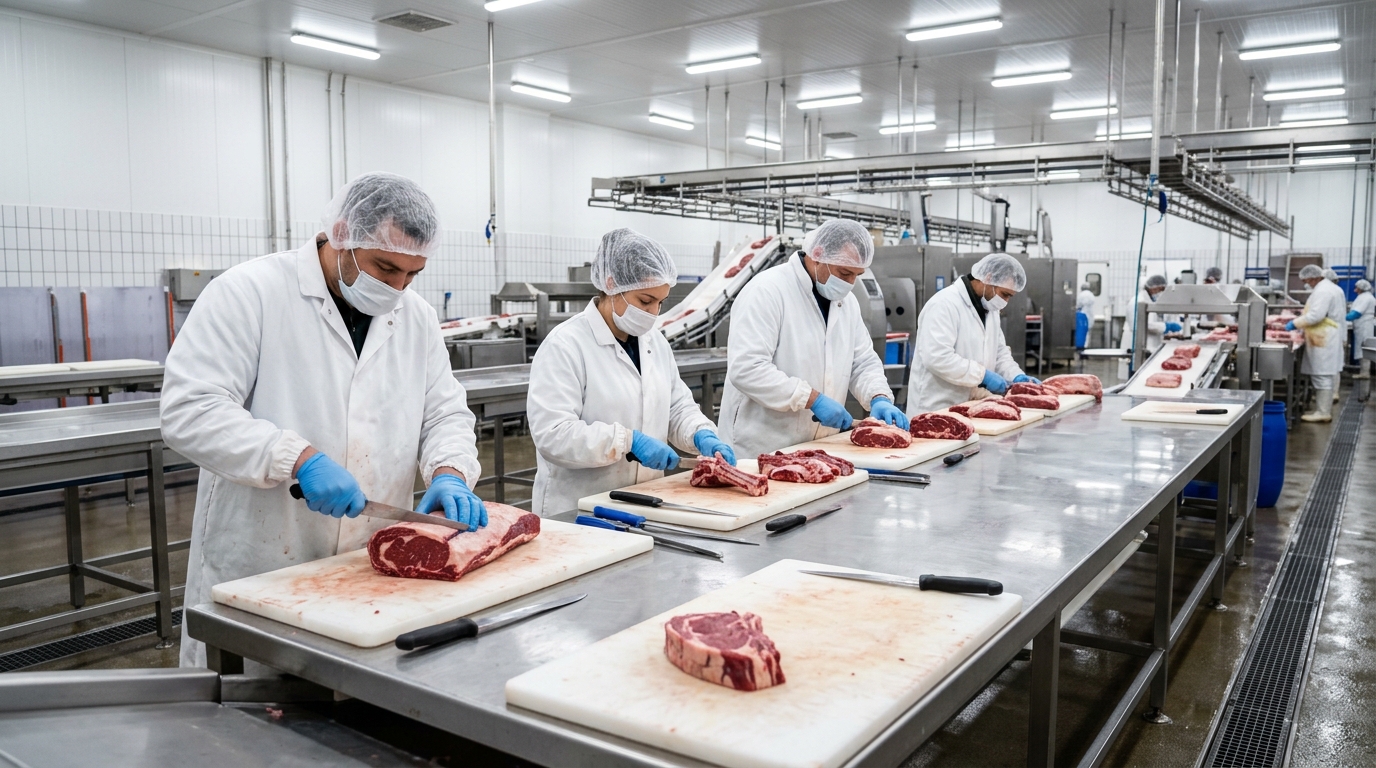
Deboning & Cutting

Temperature-controlled boning hall operations separating primal cuts, trimming to specification, and classifying yields.

  • Separation of primal cuts on stainless lines
  • Secondary trimming and commercial cutting
  • Consistent portion-control specification
  • Removal of unwanted sinew and excess fat
  • Structured product grade classification
Deboning & Cutting
Stage 8

Processing

Dedicated downstream lines designed for minced beef, portioned cuts, and value-added beef formulations subject to production capabilities.

  • Hygienic minced beef grinding lines
  • Uniform portion preparation (cubes, strips, slices)
  • Value-added forming and seasoning workflows
  • Product-specific temperature and handling controls
Processing
Stage 9

Packaging

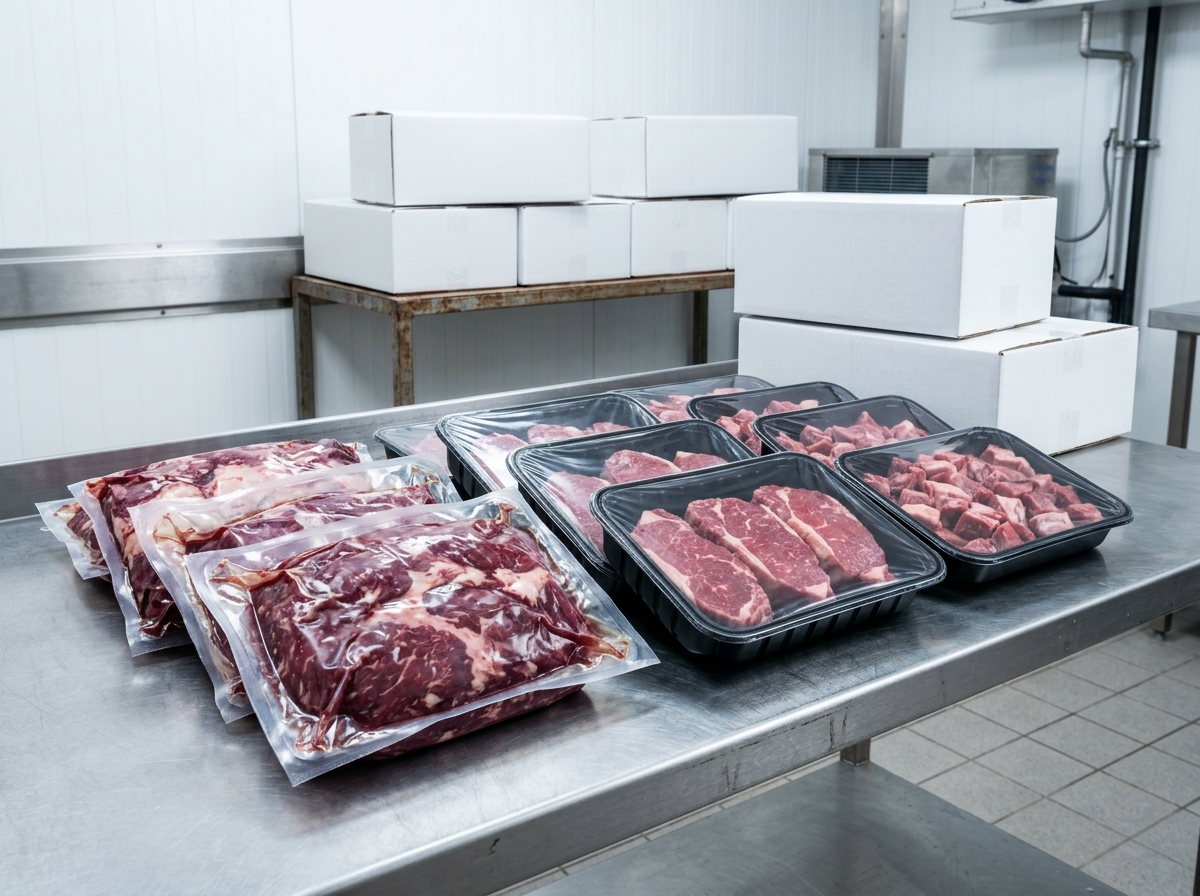
Protective food-grade sealing, bulk carton packing, and standardized batch labeling to safeguard freshness and traceability.

  • High-barrier vacuum packaging for primal cuts
  • Food-grade sealed bags and tray-sealed packs
  • Modified atmosphere packaging (MAP), where available
  • Durable bulk wholesale and frozen cartons
  • Batch identification, weight, and traceability labeling
Packaging
Stage 10

Cold Storage & Dispatch

Segregated chilled and frozen storage chambers connected to enclosed cold-chain loading bays for temperature-controlled delivery.

  • Dedicated chilled and frozen storage chambers
  • FIFO / batch-controlled inventory organization
  • Structured commercial order staging and verification
  • Temperature-controlled refrigerated transportation
Cold Storage & Dispatch